
Beyond Shopify SEO Experts: Why You Need a ChatGPT Shopping Specialist
SEO is not enough in AI shopping. Here is the new remit, skills, and playbook for the ChatGPT Shopping era.
Kaushik Mahorker
Co-founder & CEO
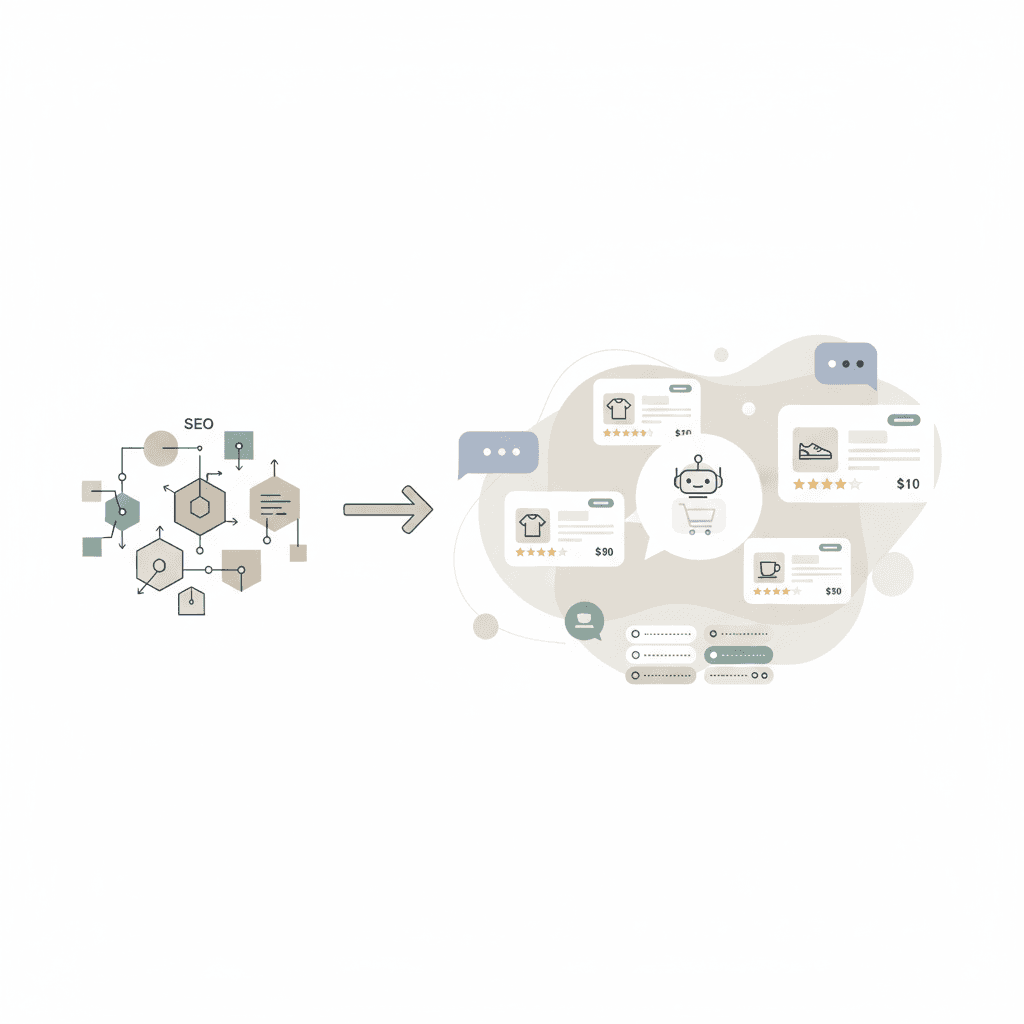
A ChatGPT Shopping specialist is not a replacement for your Shopify SEO lead. It is a cross-functional operator who turns buyer questions into catalog, content, and measurement work. The title is optional. The ownership is not.
For many brands, the right first move is to expand an existing growth or ecommerce role rather than make a new hire. What matters is giving one person the authority and time to run the workflow.
Why Shopify SEO expertise is not enough on its own
SEO specialists optimize pages for search demand. They research queries, improve site structure, write useful content, and measure organic performance. Those skills remain valuable.
Shopping conversations introduce a different set of tasks. A customer can describe a need with several constraints, compare products through follow-up questions, and receive a short answer rather than a conventional result page. The response may vary by prompt and may not expose a stable rank or a complete list of sources.
That creates questions most SEO programs are not set up to answer:
- Does the catalog contain the attributes needed to evaluate product fit?
- Which buyer questions should the team test repeatedly?
- Who corrects inaccurate or incomplete product facts?
- How should merchandising, content, and engineering prioritize fixes?
- What can the team measure when platform coverage varies?
The specialist owns this coordination.
The specialist workflow
The job is a weekly loop, not a one-time optimization project.
Build a buyer-intent library
Start with the questions customers already ask. Support tickets, onsite search, product reviews, sales calls, and post-purchase surveys are better inputs than a brainstorm in a blank document.
Organize the questions by category, use case, constraint, and stage of consideration. A useful library includes broad discovery questions and precise comparison questions. The goal is to represent real buying decisions, not to generate hundreds of minor prompt variations.
Establish a repeatable baseline
Test a fixed sample of questions and record what appears. Look for brand mentions, product mentions, factual accuracy, fit with the request, and cited sources when the surface provides them. Wildcard's prompt tracking page shows how teams can structure this kind of recurring observation.
Avoid presenting a single answer as a definitive ranking. Results can vary with wording, context, location, availability, and product changes. The specialist should report patterns and examples with those limits clearly stated.
Turn observations into catalog work
When a product is a poor fit or absent from a response, the next step is investigation. Compare the buyer's constraints with the data available in Shopify, feeds, product pages, and marketplace listings.
Typical gaps include materials, dimensions, compatibility, care, variants, age ranges, ingredients, certifications, and use cases. The specialist works with merchandising to confirm the facts, then with catalog operations to place them in structured fields. A catalog enrichment process can make this work easier to prioritize and maintain.
Improve useful content and source coverage
Some questions cannot be answered by a specification table alone. Product comparisons, buying guides, care instructions, and compatibility explainers help shoppers understand tradeoffs.
The specialist should also work with PR and partnerships on accurate third-party coverage. The goal is not backlink volume or manufactured mentions. It is clear, credible information in places customers in the category already use.
Close the purchase loop
The operator should test what happens after a product appears. Is the correct variant available? Does the link resolve to the right page? Are price and policy details consistent? Does the checkout handoff work as expected?
The team should only plan around capabilities that the relevant surface actually supports. The ChatGPT apps overview is a useful place to understand the broader integration context.
What this person should own
A clear remit prevents the role from becoming a reporting function with no path to action.
Weekly responsibilities
- Maintain the priority buyer-intent set.
- Run or review representative prompt checks.
- Triage factual errors and visibility gaps.
- Create tickets for catalog, content, and technical fixes.
- Share a short report with examples, limits, owners, and deadlines.
Monthly responsibilities
- Review attribute completeness for priority categories.
- Retire low-value prompts and add new customer questions.
- Compare recurring patterns across relevant shopping surfaces.
- Review third-party coverage with content and PR.
- Confirm that feed, inventory, and product-page data agree.
Where the role should sit
There is no universal org chart answer. Place the role where it can reach merchandising data and ship growth work.
In a smaller brand, a growth lead or ecommerce manager may own the program with support from merchandising. In a larger team, it may sit in growth, digital commerce, or product operations. An agency can help with analysis, but an internal owner still needs to approve product facts and set priorities.
The strongest candidates are comfortable with spreadsheets and product feeds, can write a clear brief, understand customer research, and know how to run a disciplined experiment. Curiosity matters, but follow-through matters more.
A practical first 90 days
Days 1 to 30: Define and audit
Choose priority categories and buyer questions. Document the current data flow from the catalog source to Shopify and other channels. Run a focused catalog audit and establish a baseline without overclaiming what it represents.
Days 31 to 60: Fix high-value gaps
Correct missing attributes for a manageable SKU set. Improve the product education needed for the priority questions. Assign owners for feed, content, and policy inconsistencies.
Days 61 to 90: Establish the rhythm
Repeat the same checks, review changes, and publish a simple operating report. Expand only after the first category has a reliable workflow.
Success at day 90 is not a promised lift in mentions. It is a functioning system: representative questions, trustworthy product data, named owners, shipped fixes, and a repeatable review.
What to do this week
- Name one person to own shopping visibility for four hours a week.
- Collect 15 real buyer questions from support, search, and reviews.
- Audit the top 10 products against the attributes those questions require.
- Create one shared backlog with merchandising, content, and technical owners.
- Schedule a 30-minute weekly review to inspect evidence and unblock fixes.
Sources
No external source links were included in the original article. This piece defines a recommended workflow and does not rely on an external market forecast.
If your team needs a starting point for that workflow, review the Wildcard product once, then keep the operating cadence focused on customer questions and catalog quality.
Keep reading
Related reading
See where your products appear.
Run a catalog audit, find the gaps, and choose the work most likely to change the answer.