
Walmart Sparky: AI Visibility Is the New Customer Acquisition Channel
Walmart Sparky gives shoppers a conversational route into the catalog. Here is a practical visibility and catalog playbook for Walmart operators.
Kaushik Mahorker
Co-founder & CEO
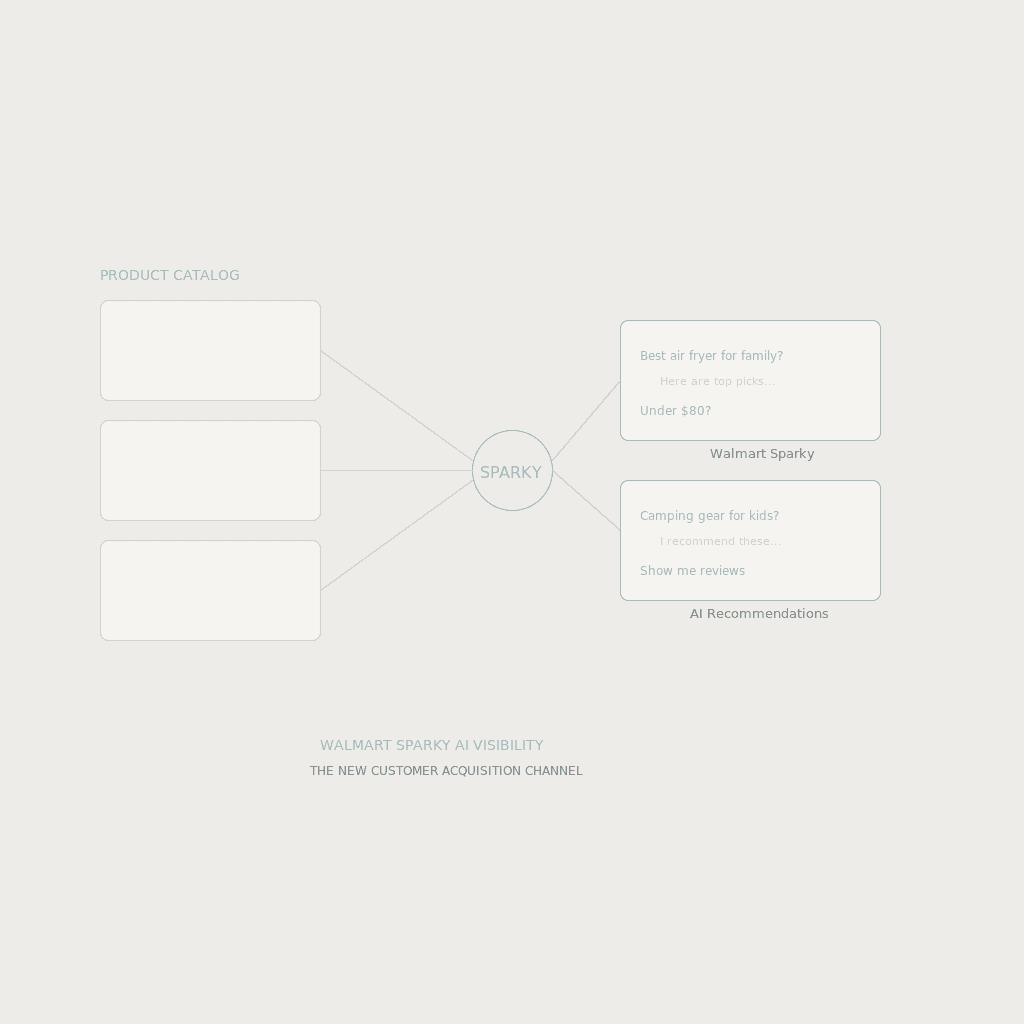
Walmart Sparky gives shoppers a conversational way to explore products in Walmart's catalog. For brands and marketplace sellers, the right response is a Walmart-specific catalog routine: improve item attributes, keep variants and fulfillment details accurate, strengthen listing content, and inspect how real shopping questions are answered.
Sparky is another route into the catalog, not a reason to abandon Walmart search or retail media. Its outputs can vary, and operators should not assume that every response exposes a stable rank or a complete source trail.
What Sparky changes for product discovery
A search query may be short: "air fryer under $80." A conversational request can carry more context:
Which air fryer works for a family of four, fits on a small counter, and has parts that are easy to clean?
To answer well, a shopping experience needs capacity, dimensions, care details, price, and availability. A product can be relevant but hard to match if those fields are missing, inconsistent, or buried in unclear copy.
That makes Sparky visibility a catalog-quality problem before it is a copywriting problem.
Why it matters for Walmart operators
Walmart teams already balance item setup, content quality, price, inventory, fulfillment, ratings, and retail media. Sparky makes the connections between those functions more visible.
Shopper language is more specific than category keywords
Customers describe households, budgets, occasions, dietary needs, room sizes, and compatibility. Those details can reveal attribute gaps that broad category terms miss.
Walmart item data has to agree
Titles, descriptions, key features, specifications, variants, images, and fulfillment details should tell the same story. A concise conversational answer can magnify a mismatch that a shopper might otherwise discover later on the item page.
Local context can affect usefulness
Price and availability may differ by location, seller, or fulfillment method. Operators should record the context of a Sparky check and avoid turning one shopper's result into a market-wide claim.
Visibility work should improve the item page too
The best fixes make the product easier for any Walmart shopper to evaluate. Clear dimensions, verified compatibility, better variant naming, and honest care instructions are useful whether discovery begins in Sparky, search, an ad, or a category page.
The Walmart catalog playbook
Start with high-value item groups
Choose one category and a focused set of items. Include products with meaningful revenue, high comparison activity, or recurring customer questions. Review the parent and all relevant variants together.
Audit category attributes
Check the fields Walmart makes available for the category and compare them with your source catalog. Prioritize attributes that change purchase fit, such as:
- Size, dimensions, capacity, and weight
- Material, ingredients, or fabric
- Compatibility and included components
- Age range or intended user
- Care, assembly, and maintenance
- Certifications or claims your team can verify
Do not fill fields with guesses or copy a competitor's data. Wildcard's catalog enrichment workflow can help teams identify gaps while keeping verified source data central.
Make variants understandable
Review color, size, pack count, flavor, and other variant labels. A shopper should be able to tell exactly what changes between options. Confirm that images and descriptions match the selected item.
Variant hygiene is especially important when one item group contains options with different quantities, dimensions, or use cases.
Align content with product facts
Use the title and key features to communicate the product clearly within Walmart's content rules. Descriptions can add use cases and context, but should not contradict structured specifications.
Avoid stuffing conversational phrases into listing copy. Natural language is useful when it communicates a verified fact, not when it imitates prompts.
Check fulfillment, price, and availability
Record seller, price, fulfillment method, and location when reviewing Sparky responses. If the item is unavailable or the offer is not competitive, note that separately from content quality.
These conditions affect the shopper's decision, but their exact role in Sparky output should not be asserted without evidence.
Learn from ratings, reviews, and questions
Customer feedback shows where the listing failed to set expectations. Group recurring questions and complaints by product attribute, then decide whether to fix the item, the content, or both.
Follow Walmart's policies for collecting and responding to reviews. Do not turn subjective customer statements into official specifications.
A weekly Sparky visibility routine
1. Build a question set
Use Walmart search behavior available to your team, reviews, customer care contacts, and merchandising knowledge. Include discovery questions, comparisons, constraints, and occasion-based requests.
2. Record the baseline
Where Sparky is available, run a consistent sample and save the date, location context, question, products shown, and explanation. Note factual errors and unanswered constraints.
The Walmart Sparky page provides more context on the surface. For recurring checks, prompt tracking can help keep the observation method consistent.
3. Diagnose before editing
Trace each issue to the likely source: item attributes, variants, content, images, offer data, or a platform behavior you cannot verify. Only the first five are directly actionable.
4. Fix the catalog source
Correct verified facts upstream, then publish them through the normal Walmart process. Avoid a one-off item edit if an automated feed will overwrite it later.
5. Review patterns, not anecdotes
Repeat the core questions after changes have had time to appear. Look for recurring improvements or errors across multiple observations. Do not promise that an attribute change will produce a particular Sparky placement.
How this differs from an Amazon Rufus program
The operating principles are similar, but the work should not collapse into one generic marketplace checklist. Walmart has its own category taxonomy, item setup process, offer context, content rules, fulfillment experience, and reporting.
Share verified source data across channels, then adapt it to each marketplace. A field that maps cleanly on Amazon may need a different value or structure on Walmart. The Walmart operator should own that last mile.
What to do this week
- Choose one Walmart category and 20 priority items, including their variants.
- Collect 10 real shopping questions from reviews, support, and merchandising.
- Run an item data audit against the attributes those questions require.
- Fix three verified gaps at the catalog source and republish them through the normal feed.
- Add a 30-minute Sparky review to the weekly Walmart marketplace meeting.
Sources
The original article included no external factual source links beyond the Wildcard site. Claims about shopper volume, conversion, trust transfer, and direct recommendation factors were removed because the draft did not cite them.
For a single next step, review the Wildcard product overview and decide whether the workflow fits your existing Walmart catalog process.
Keep reading
Related reading
See where your products appear.
Run a catalog audit, find the gaps, and choose the work most likely to change the answer.